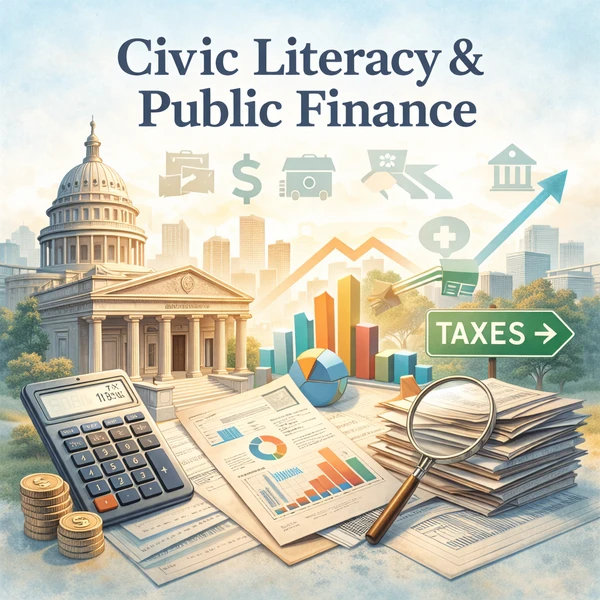
Civic Literacy & Public Finance
How Public Institutions and Fiscal Systems Function in Practice
Public institutions shape nearly every aspect of economic life — from infrastructure and education to healthcare, taxation, and public services. Yet for many people, how these systems actually work remains unclear.
Civic literacy bridges that gap.
It helps individuals understand how governments raise, allocate, and manage resources, and how those decisions affect economic outcomes over time.
Ball Political Planning explores civic literacy and public finance not to promote ideology, but to clarify how institutional systems operate in practice.
Why Civic Literacy Matters
A well-functioning economy depends not only on markets, but also on the public systems that support them. When people understand how those systems work, they are better equipped to interpret policy outcomes, financial tradeoffs, and long-term economic trends.
Civic literacy helps explain:
- How public revenue is generated and allocated
- How budgeting and fiscal priorities are established
- Why certain programs expand while others contract
- How fiscal decisions shape opportunity, stability, and risk
Understanding these processes builds clarity — even when outcomes are complex or imperfect.
How Public Finance Shapes Economic Outcomes
Public finance influences nearly every layer of the economy, often in ways that are not immediately visible.
Revenue and Taxation
Governments rely on various forms of taxation to fund services and infrastructure. The structure of tax systems affects incentives, behavior, and long-term economic distribution.
Spending and Investment
Public spending decisions influence economic growth, labor markets, innovation, and regional development.
Debt and Fiscal Sustainability
Borrowing allows governments to manage economic cycles, but long-term debt decisions also shape future flexibility and fiscal stability.
Intergovernmental Systems
Federal, state, and local governments interact through complex funding structures that affect how services are delivered and financed.
Understanding Institutions in Practice
Public institutions operate within legal, financial, and administrative frameworks that evolve over time. Understanding these systems helps clarify:
- Why policy implementation can differ from policy intent
- How institutional constraints shape outcomes
- Why reforms often produce delayed or uneven results
Civic literacy provides the context needed to interpret how governance works beyond headlines or simplified narratives.
Our Approach
Ball Political Planning approaches civic literacy with a focus on:
- Structural understanding rather than political argument
- Function over rhetoric
- Long-term outcomes rather than short-term debates
We aim to explain how systems function — not to advocate for specific political positions or outcomes.
Why This Understanding Matters
When people understand how public institutions and fiscal systems operate, they gain:
- Greater clarity about economic tradeoffs
- Improved ability to interpret policy outcomes
- A deeper understanding of how public decisions shape everyday life
Civic literacy supports informed engagement, economic awareness, and long-term financial understanding.
Explore Related Topics
This topic connects closely with other areas of Ball Political Planning, including:
- Policy History & Long-Term Outcomes
- Economic Policy & Household Impact
- Generational Economics
- Tax Policy & Household Outcomes
- Housing, Credit & Financial Stability
Together, these topics provide a structured view of how public systems shape economic reality.
Understanding Institutions. Interpreting Outcomes. Building Context.
Ball Political Planning exists to clarify how public systems function — helping readers better understand the economic structures that shape daily life.
No posts